Topcoat selection: novolac, polyurethane or polyaspartic
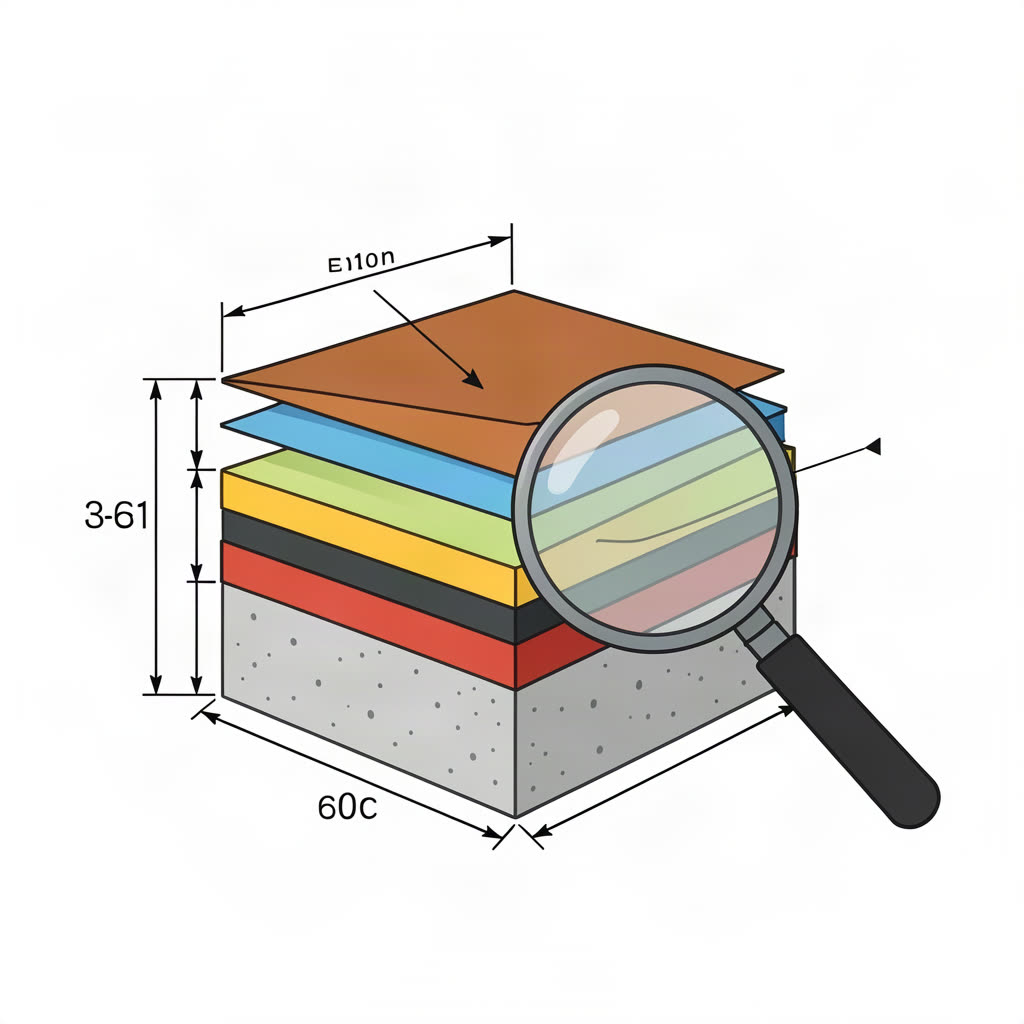
A resinous floor in Grand Prairie is really two decisions stacked on top of each other. The first is the base system — primer, build coats, broadcast material. The second, and the one that decides how the floor reads and behaves three summers from now, is the final topcoat. That layer is the only part of the system the sun, the tires and the chemicals actually touch.
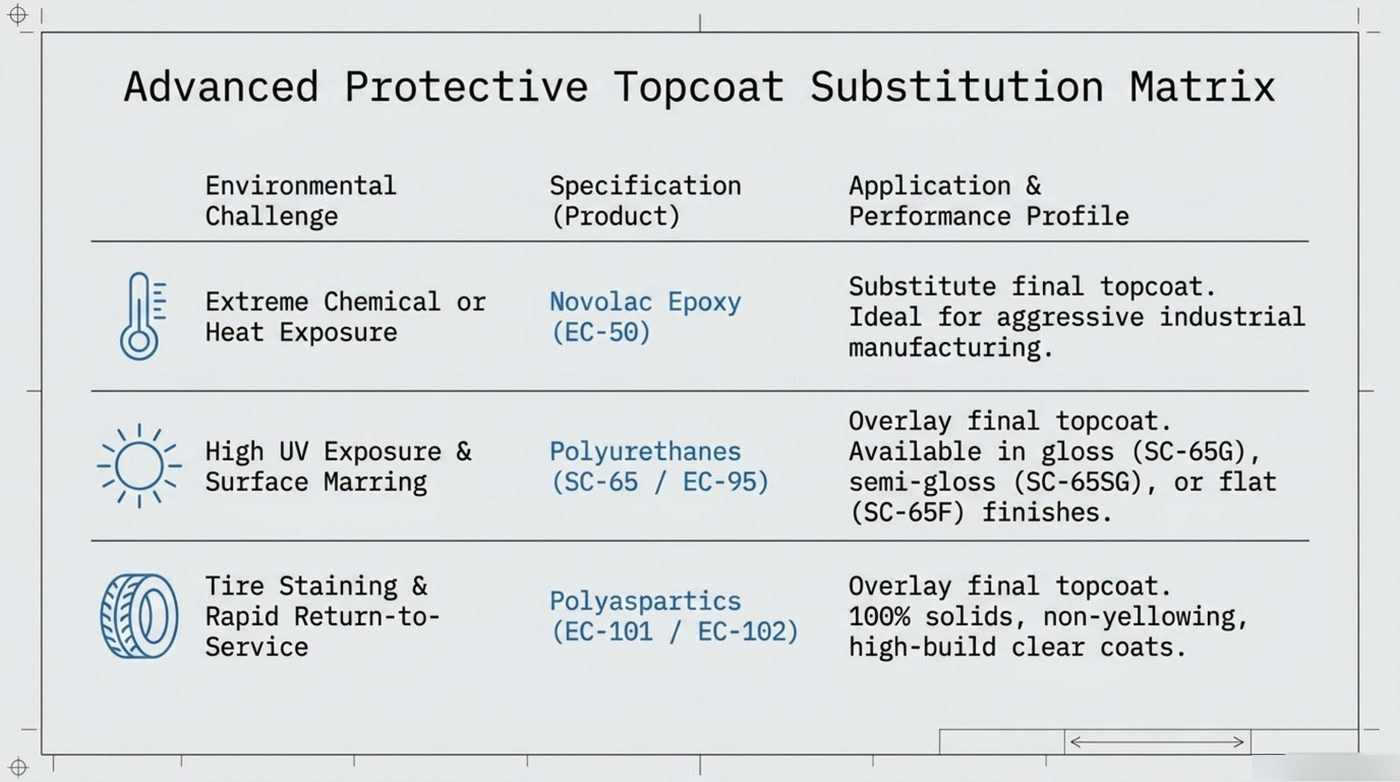
Specification work on this subject is usually organised as a substitution matrix: environmental challenges down one side, product families across the other, and a rule for each pairing that says whether to substitute the final topcoat outright or overlay the one already there. Designers in Grand Prairie and Arlington use that matrix so they are not picking a topcoat simply because it is familiar.
The short version: a novolac epoxy is the answer to extreme chemical or heat exposure, a polyurethane is the answer to high UV exposure and surface marring, and a polyaspartic is the answer to tire staining and a rapid return to service. If the floor has no exposure profile worth naming, you are choosing a topcoat for the wrong reason.
Reading the substitution matrix
Each row of the matrix pairs one environmental challenge with one product family, one application instruction and one performance profile. The application instruction is the part most homeowners skip: substituting the final topcoat means the old finish is replaced, while overlaying means a new layer is built on top of the existing one. Those are different operations with different labour and different costs.
| Environmental challenge | Topcoat family | Required action | Performance profile |
|---|---|---|---|
| Extreme chemical or heat exposure | Novolac epoxy | Substitute the final topcoat | Ideal for aggressive industrial manufacturing environments |
| High UV exposure and surface marring | Polyurethane | Overlay the final topcoat | Available in gloss, semi-gloss or flat finishes |
| Tire staining and rapid return-to-service | Polyaspartic | Overlay the final topcoat | 100% solids, non-yellowing, high-build clear coat |
Novolac epoxy: when the exposure is chemical, not cosmetic
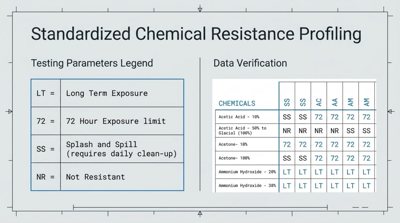
Novolac epoxy is specified when a floor has to tolerate extreme chemical or heat exposure, and the matrix points it at aggressive industrial manufacturing. It is a substitute-grade answer: the finishing layer is replaced rather than topped, because the chemistry of the coat itself is what carries the resistance.
In a Grand Prairie garage the case for a novolac topcoat is narrower than it first appears. It earns its place where a bay is used for solvent-heavy parts washing, where concentrated chemistry is decanted, or where a small shop in Midlothian runs equipment that drips rather than splashes. For a two-car garage in DeSoto that mostly holds vehicles, the extra resistance is not the limiting factor — UV stability and hot-tire behaviour matter far more, and those are different rows of the same matrix.
Polyurethane: controlling UV exposure and surface marring
A polyurethane is the overlay answer to high UV exposure and surface marring. The finish is not a single product but a family: it is available in gloss, semi-gloss or flat finishes, which changes how a floor performs visually long before it changes how it performs mechanically.
Finish selection is a maintenance decision. Gloss shows every tire lap and dust bloom; semi-gloss is the middle ground most homeowners settle on; a flat finish reads closer to bare concrete and hides scuffs on an industrial build. On a 20-35 mil total system, the difference between semi-gloss and flat is the difference between a floor that announces itself and one that disappears under the work.
Polyaspartic: 100% solids and a fast return to service
A polyaspartic clear coat is the answer to tire staining and a rapid return to service. It is a 100% solids, non-yellowing, high-build clear coat, and that combination is what lets it sit over a pigmented base as the final layer without drifting amber under the sun.
Return-to-service phasing follows the chemistry rather than the calendar: no pedestrian traffic for 0-48 hours, a minimum 72 hours before vehicle traffic, and five days to full cure, at which point the floor can take heavy abrasion and chemical exposure. For a household in Cedar Hill that cannot park outside for a week, that sequence is the whole reason a polyaspartic topcoat is worth specifying over a slower-curing alternative.
Matching the matrix to a real floor
Most Grand Prairie projects resolve to the polyaspartic row because the two challenges that actually show up in a residential garage — UV and hot, stained tires — sit there. The novolac and polyurethane rows become relevant when the space changes character: a workshop with solvent handling pushes toward novolac, a west-facing floor that has gone flat and scuffed pushes toward a polyurethane overlay.
The practical test is to name the exposure before naming the product. Write down what will land on the floor, how hot the surface gets in August, and how many days the space can stay empty. Those three answers, not the marketing name of the coating, decide which row of the matrix applies. You can sanity-check the rest of the specification against our epoxy flooring checklist, or compare build thickness and typical pricing in the comparison guides before any work is scheduled.
Frequently asked questions about topcoat selection
Can a novolac epoxy topcoat be used on a residential garage floor?
It can, and it is the correct substitution when the space sees extreme chemical or heat exposure. On a standard two-car garage it is usually more resistance than the exposure requires, and it does not bring the non-yellowing behaviour a floor exposed to daylight needs.
Is a polyurethane overlay the same as a polyaspartic clear coat?
No. A polyurethane is the overlay answer for high UV exposure and surface marring and comes in gloss, semi-gloss or flat finishes. A polyaspartic is the overlay answer for tire staining and rapid return to service, at 100% solids and non-yellowing. The two are chosen for different challenges.
How long before the floor can be used again?
The phasing that accompanies a fast-cure topcoat is 0-48 hours with no pedestrian traffic, 72 hours minimum before vehicle traffic, and five days to full cure. Full cure is the point at which the system is rated for heavy abrasion and chemical exposure.
If you want a topcoat recommendation tied to how your Grand Prairie, Arlington or Midlothian space is actually used, call Grand Prairie Epoxy Floors at (972) 850-7986 and we will help you match the exposure to the right layer. You can also start with the garage floor epoxy service page or run your square footage through our flooring tools first.